Lotus Tattoo Meaning: Purity From the Mud, and the Petal Count That Changes It
The lotus blooms from mud without a stain on it — that is the whole meaning. How petal counts and colors shift the message, and why the lotus is drawn symmetrical or not at all.
Most flowers in tattooing are chosen for how they look. The lotus is chosen for where it grows. It roots in mud, in water so murky no light reaches the bottom, and then it rises clean: the bud pushes up through the dark, opens above the surface without a speck of that mud on its petals, closes at night, sinks, and does it again the next morning.
For more than three thousand years, across Egypt, India, China, and Japan, people have seen their own story in that performance — something valuable coming up unspoiled from a bad place. That is why lotus tattoos rarely mean simply "pretty flower." They mean survival with the evidence still clean.
This article works through what the petal counts and colors actually change, why artists insist the design be symmetrical, and where on the body a lotus holds its geometry instead of losing it.
A flower that was sacred before it was decorative
The lotus carries religious weight that the rose, for all its history, never quite matched.
- In Hindu tradition the lotus is the seat of deities — Lakshmi stands on it, Vishnu carries it, and creation itself is described as unfolding from it.
- In Buddhism it becomes a map of a life: the closed bud is potential, the opening flower is awakening, and a fully open bloom is enlightenment, the state of seeing clearly after coming through confusion. The Buddha is routinely pictured seated on a lotus for exactly that reason.
- In ancient Egypt the blue lotus tracked the sun — opening at dawn, closing at dusk — and stood for rebirth, which is why it appears in tomb art meant to carry someone into a next life.
None of this is background trivia for a tattoo. It explains the tone lotus wearers usually want: not romantic, not defiant, but resolved. People choose a lotus after addiction, illness, divorce, grief, or a long depression far more often than they choose it for a first decorative piece, and the design reads that way even to strangers who know none of the history.
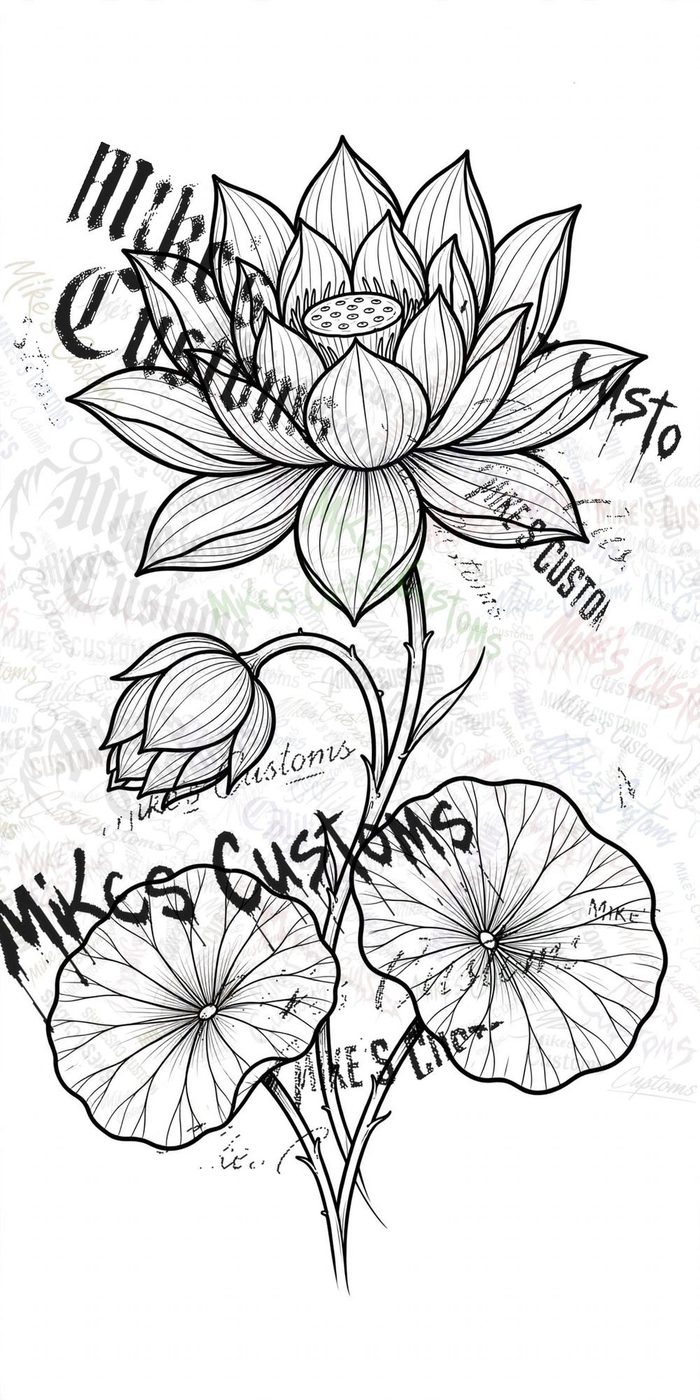
Petal count is not decoration, it is the sentence
Ask a lotus wearer how many petals theirs has and many will not know — which is a shame, because in the traditions this flower comes from, the count is the meaning.
- An eight-petal lotus is the most tattooed and the most loaded: eight is the number of the Noble Eightfold Path in Buddhism, and the eight-petaled form is used in mandalas as a picture of cosmic harmony and balance. If you want the classic spiritual reading — a life brought into order — eight petals is the correct drawing, not just a pretty one.
- A five-petal lotus is sometimes linked to the five senses or, in some renderings, to a more personal, less doctrinal balance.
- Many-petaled forms, up to the symbolic thousand-petaled lotus of the crown chakra in Hindu thought, push the meaning toward full awakening — rarely drawn literally at a thousand, but suggested with layered rows of petals behind the main bloom.
- A closed bud, by contrast, means none of that has happened yet: it is the tattoo of potential, of a beginning deliberately chosen before the outcome is known, and it suits younger wearers and first chapters better than a full bloom sometimes does.
- A half-open lotus sits between the two and has become the honest choice for people mid-process — in recovery, in therapy, in a rebuild that is working but not finished.
Petal count also controls size. Every petal is two lines and a space between them. Eight clean petals need room; crowd sixteen detailed petals into a two-inch ankle piece and in ten years you will own a soft pink star.
Your artist is not being difficult when they cut petals to fit the spot — they are editing the design down to the version that will still be legible when you are older.
Color, and what the mud does to it
Lotus color language is older and more specific than rose color language, because the traditions assigned meanings deliberately.
- White is purity and spiritual perfection — the lotus that came through untouched, the most common choice for memorial and recovery pieces, usually rendered in black and grey with white left as skin.
- Pink is the supreme lotus in Buddhist iconography, the flower of the Buddha himself, and reads as devotion and the highest form of the symbol.
- Red shifts it toward the heart: love, compassion, and passion, closer to how a rose works.
- Blue signifies wisdom, knowledge, and control of the senses, and is traditionally drawn partly closed — wisdom still unfolding.
- Purple carries mysticism and is often tied to that eight-petal form.
- Gold, usually suggested with yellow or with dotwork shading rather than metallic ink, means total attainment.
The honest studio note is that pastel lotus colors are among the most fragile in tattooing. Pale pinks, lavenders, and soft blues fade faster in sun than saturated work, and a lotus whose entire meaning hangs on being pale pink can quietly stop saying it.
If the color is the point, put the piece where clothing covers it, or strengthen the drawing so the shape carries the meaning even as the color softens — the long game is covered in our guide to choosing a design that ages well.
| Color | Meaning | Notes from the studio |
|---|---|---|
| White | Purity and spiritual perfection — the lotus that came through untouched | The most common choice for memorial and recovery pieces, usually rendered in black and grey with white left as skin |
| Pink | The supreme lotus in Buddhist iconography, the flower of the Buddha: devotion and the highest form of the symbol | Pale pinks are among the most fragile colors in tattooing and fade faster in sun |
| Red | The heart: love, compassion, and passion | Closer to how a rose works |
| Blue | Wisdom, knowledge, and control of the senses | Traditionally drawn partly closed — wisdom still unfolding |
| Purple | Mysticism | Often tied to the eight-petal form |
| Gold | Total attainment | Usually suggested with yellow or dotwork shading rather than metallic ink |
Why the lotus is drawn symmetrical or not at all
Here is the technical heart of this design, and the thing that separates a lotus from almost every other flower tattoo: it is a symmetrical emblem, and symmetry does not forgive. A rose can be a little lopsided and read as organic. A lotus drawn three millimeters off-center reads as a mistake — the eye goes straight to the uneven petals because the whole point of the image is balance.
That is why experienced artists stencil a lotus with unusual care, check it with the wearer standing naturally rather than twisted toward a mirror, and will sometimes advise redrawing rather than nudging a stencil that is sitting on curved or moving skin.
Symmetry also decides placement, which we will return to below. It is why the lotus pairs so naturally with geometric and dotwork rendering: a mandala halo, a row of dots descending below the bloom, or an unalome — the spiral-and-winding-line symbol of the path to enlightenment, often drawn curling up from the stem — all extend the same ordered language.
If that direction appeals to you, read the Dotwork style guide; dotwork lotuses, shaded entirely in stippled dots, have become a requested sternum and spine design because the technique enforces the calm the symbol promises. See how artists handle that discipline on the gallery's Flowers & Botanicals shelf, where lotuses sit next to looser flowers and the difference in temperament is obvious.
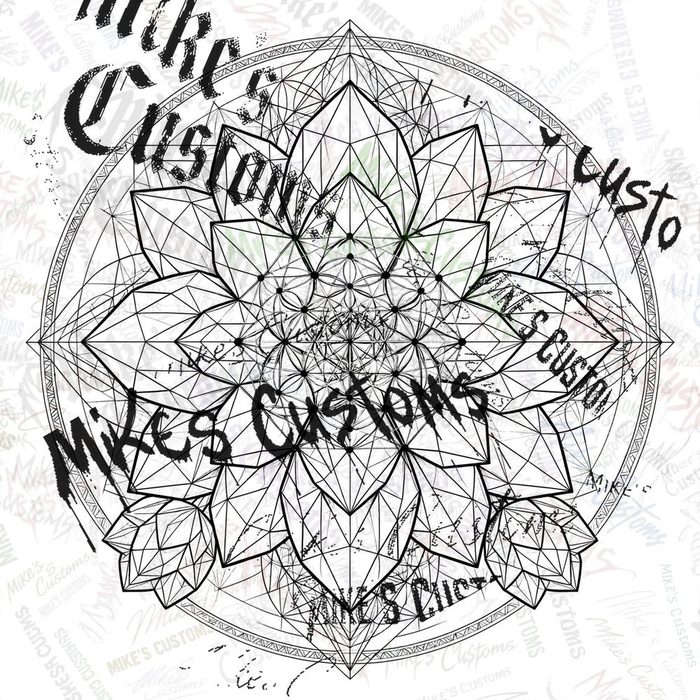
Companions: koi, water, and the unalome
A lotus alone is a complete statement, but its traditional companions each bend the meaning.
- Koi swimming beneath or around a lotus imports the Japanese story of perseverance — the fish that swims upstream — and turns the piece into a narrative about effort rewarded with beauty.
- Water lines or waves under the bloom ground the flower in its element: no mud, no lotus, as the Buddhist saying goes.
- A moon above a lotus leans into the flower's daily closing and opening, a cycle piece about rhythms and return.
- An Om or a small script word at the stem makes the spiritual reading explicit, though many wearers prefer to let the flower say it without subtitles.
Because the lotus works by composure, surrounding it with five other symbols usually dilutes it. One flower, one companion, one idea is enough.
Size and placement: flat, centered, and given room
The placements where lotuses thrive share two traits: they are relatively flat, and they offer a natural center line.
- The sternum and upper back between the shoulder blades are the classic homes — both give the design a true vertical axis to balance on, and a sternum lotus with dotwork trailing downward has become a modern standard for good reason.
- The spine suits a vertical arrangement: bud, bloom, and unalome stacked along the body's own center.
- Forearms work well for a single frontal bloom at three inches or larger.
- Thighs and shoulders give the room a many-petaled or koi-accompanied piece needs.
Where lotuses struggle is anywhere the skin twists hard in daily movement — the side of the wrist, the edge of the foot, across the elbow ditch — because twist is the enemy of symmetry, and a design balanced at rest can look drunk in motion.
Small lotuses are possible, but only simplified ones: a five-petal outline at an inch and a half can hold; a detailed eight-petal shaded bloom at that size cannot. Our stencil-day guide describes the stand-and-move mirror check, and no design benefits from it more than this one.
Have your artist show you the stencil while you stand, breathe, and turn — not while you are craned into the position that makes it look perfect.
How a lotus ages
A well-drawn lotus ages gracefully for a structural reason: its shapes are large, separated, and ordered, so the gentle line spread that decades bring reads as softening rather than collapse. Black-and-grey and dotwork lotuses age best, because stippled shading does not blur the way smooth gradients can, and there is no fragile pastel to lose.
The risks are specific and avoidable.
- Fine interior petal lines drawn too close together will eventually merge — spacing, not line weight, is the protection.
- Pale color fills without a strong outline can fade to a suggestion of a flower; if you love the soft look, accept a future touch-up as part of the bargain and keep the outline honest.
- And a lotus placed over skin that will stretch significantly deserves a frank conversation first, because stretched symmetry is visibly stretched.
Chosen on purpose, a lotus comes through the years clean.
Keep reading
Browse the Flowers & Botanicals shelf in the gallery, or read How to Choose a Tattoo Design That Ages Well and the Dotwork style guide.
More from the article series:
- When Your Muse Has No GPU: Two Compute Workarounds Worth Knowing — November 18, 2026
- Phoenix Tattoo Meaning: Rebirth, Fire, and Rising on Your Own Terms — November 16, 2026
- Cherry Blossom Tattoo Meaning: Beauty That Knows It Is Brief — November 16, 2026