Japanese (Irezumi) Tattoos: The Complete Guide
Centuries-old Japanese tattooing: dragons, koi, tigers, peonies and waves composed as full-body storytelling, with wind bars, clouds and water binding every element together.
Irezumi is the traditional tattooing of Japan, with roots in the woodblock-print world of the Edo period. Its imagery is a complete visual language: dragons for wisdom and strength, koi for perseverance, tigers for courage, peonies for prosperity, cherry blossoms for the brevity of life, waves and wind for the forces nobody controls. In classical irezumi these are not decorations on a body — they are a single composed suit of imagery, planned across the back, sleeves and legs as one artwork.
Even when a modern wearer takes a single piece — one dragon, one koi sleeve — the design grammar stays Japanese: bold black outlining, rich but disciplined color, and background elements (waves, clouds, wind bars, maple leaves, blossoms) that carry the subject and bind separate pieces into a whole.
Japanese (Irezumi) at a glance
| Line weight | Bold black outlining with grey-wash background waves and clouds |
|---|---|
| Palette | Saturated and symbolic: red, orange, green and pink on black and grey |
| How it ages | Ages with dignity; solid color and black structure hold for decades |
| Best placements | Back, full sleeves, chest panels and legs, composed as a suit |
| Minimum size | Thinks big: sleeves and backs; small single motifs are the exception |
How Japanese (Irezumi) designs are drawn
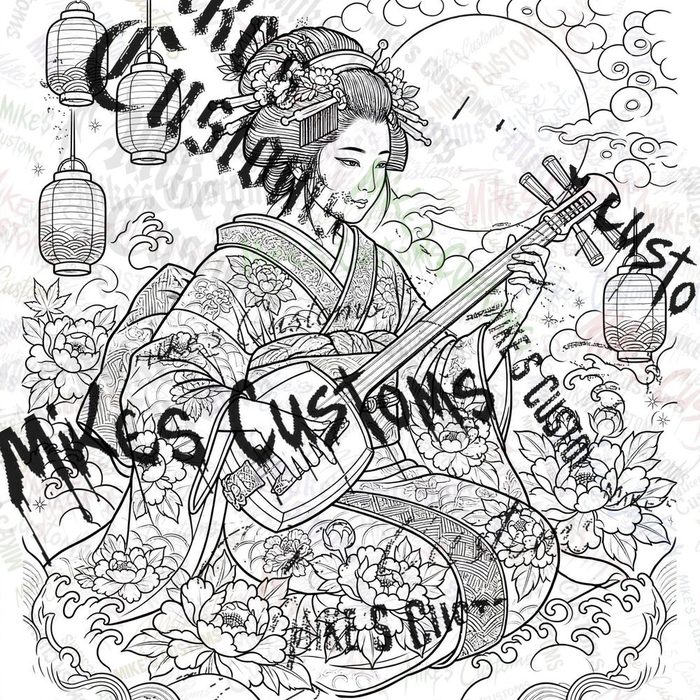
An irezumi design flows. Subjects are drawn in motion — the dragon coils, the koi climbs the waterfall, the tiger descends through bamboo — and the background is as important as the figure: black wind bars (mikiri) frame the edges, grey-wash waves and clouds fill the field, and seasonal flowers set the scene. Color is symbolic and saturated: red peonies, orange koi, green dragons, pink blossom. Nothing floats in empty skin; the background is what makes Japanese work instantly recognizable across a room.
Best placements for Japanese (Irezumi) tattoos
Placement is composition in this style. Backs are the classic canvas — a full back piece (kame-no-koh) is irezumi's masterpiece format — followed by sleeves that run shoulder to wrist with the background continuous, chest panels (hikae) that frame the front, and leg suits. Single motifs work smaller — a koi on a forearm, a dragon head on a shoulder — but they are usually drawn as the seed of a larger suit, with background that can extend when you are ready.
Placement inside a Japanese composition follows the background as much as the subject. Wind bars are cut to the edge of a body area, the mikiri line, so a sleeve that ends cleanly at the wrist and a chest panel that stops at the center line both need that border planned before the first session, not trimmed to fit at the end. A dragon placed on a sleeve should move with the arm, head and claws positioned so bending the elbow animates rather than crumples it, and a koi on a calf is usually angled to climb or descend the muscle rather than pasted straight over it. The front of the thigh suits peony and chrysanthemum work because the flowers can open across the flat panel, while the ribs compress a composition when you sit, which artists allow for by spacing background waves wider there. Traditional body-suit planning also leaves deliberate gaps at the center of the chest, stomach or back depending on the format chosen, so starting one piece without the map can close a door the wearer wanted open.
How big does a Japanese (Irezumi) tattoo need to be?
Japanese work thinks big. A sleeve or back gives the background room to move and the subjects room to be drawn at the scale their detail deserves — scales, whiskers, claws, petals. Small irezumi exists (a single blossom, a small mask), but the style's power is in the large composition, and cramming a dragon into four inches produces a knot, not a dragon. If you are starting a suit, plan the whole map early: your artist designs the first piece so its background can grow into the next.
How Japanese (Irezumi) tattoos age
Irezumi ages with dignity — it was engineered over centuries for exactly that. The bold black work holds the composition, the saturated colors are packed solid, and the grey background settles into a soft smokiness that suits the style. Pieces may need color refreshing after a decade or more, especially reds and oranges, but a Japanese suit at twenty years still announces itself. It is one of the safest choices for large, lifelong work.
Irezumi is session work by nature. A sleeve is commonly built as outline in one sitting, background black and grey in another, then color in stages, with at least two to three weeks of healing between sessions so each layer settles before the next is judged. That spacing matters: color packed over still-raised linework heals unevenly, and background waves need healed edges to stay smooth where they meet a subject. Aftercare for large Japanese work is mostly logistics: loose clothing that does not shear across a whole healing forearm, sleeping so a fresh back panel is not pressed and stuck to bedding, and washing a large area in sections without soaking it. The style suits people committing to a theme, a map and a multi-month relationship with one artist. It suits people badly who want to collect unrelated small pieces on the same limb, change direction halfway through a background, or mix several artists across one suit. The background is the contract that binds it all, and changing hands mid-background is where otherwise strong suits lose their flow.
Choosing a Japanese (Irezumi) design
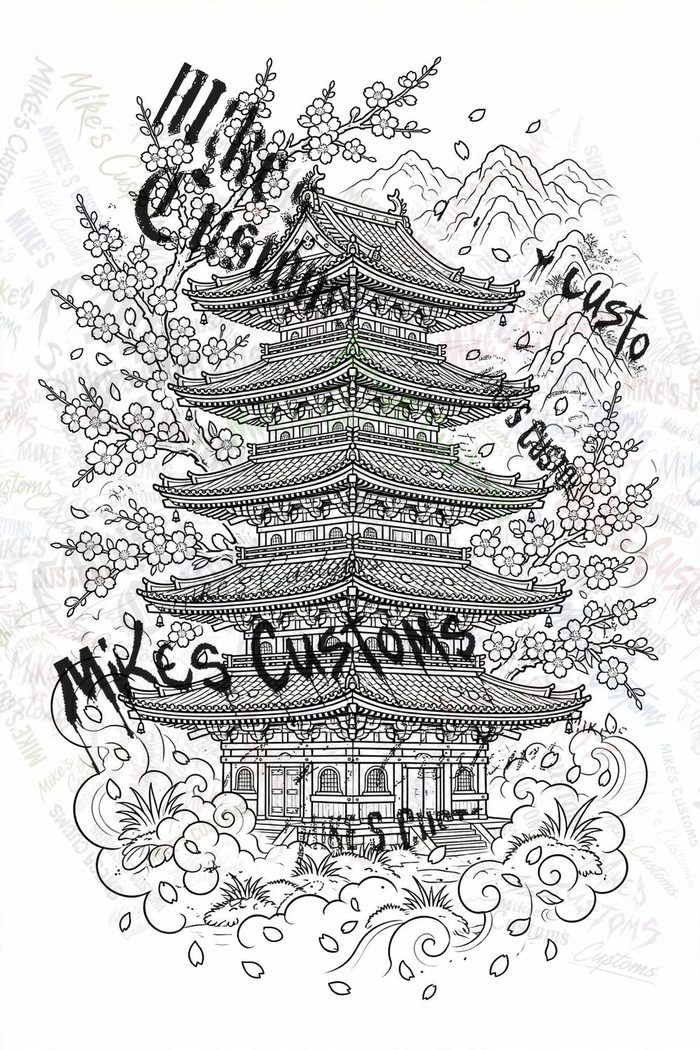
Choose Japanese designs by subject and season: the flowers in the background should match the story (cherry blossom with spring subjects, maple with autumn). Our irezumi pieces come with full color and linework, and the custom desk draws a lot of them — tell us the subject pairing you want and whether you are starting a sleeve or back, and the background will be composed to extend later.
Browse Japanese (Irezumi) designs Order a custom Japanese (Irezumi) design
Related style guides
- Black & Grey Realism — Photographic shading built from black ink and water: portraits, statues, animals and scenes rendered in smooth grey gradients with no linework doing the heavy lifting.
- Color Realism — Full-color photographic tattooing: animals, eyes, flowers, food, film scenes and portraits rendered with blended color, soft edges and skin-tone highlights.
- Blackwork — Black ink only, used at full strength: bold graphic shapes, heavy saturation, ornamental pattern and dark illustrative work with no grey wash and no color.
New to all of this? Start with how to choose a tattoo design that ages well, then the complete aftercare guide for what happens after the appointment.