Tribal Tattoos: The Complete Guide
Bold black flowing shapes rooted in indigenous tattoo traditions — Polynesian, Māori, Samoan, Bornean and Haida — and the sharp, sweeping tribal style that swept the 1990s.
Tribal is the oldest tattoo language on earth. The word covers the indigenous traditions of Polynesia, Samoa (where tatau gave tattooing its name), the Māori tā moko, Borneo and the Haida, among others — systems in which pattern carries genealogy, rank, protection and identity. In the 1990s a distilled version — bold black interlocking blades and flames flowing over shoulders and arms — became the decade's defining tattoo and introduced a generation to tattooing.
Both meanings live under this name today, and a good guide should be honest about the difference: traditional Polynesian and Māori work is a cultural language with rules and meanings that belong to those cultures, while the 90s abstract tribal is a decorative style of pure form. Many wearers choose the second; those drawn to the first do best working with artists from or deeply trained in those traditions.
Tribal at a glance
| Line weight | Pure black tapered shapes; no shading, form is everything |
|---|---|
| Palette | Black only; sharp negative-space skin between the shapes |
| How it ages | Among the most permanent; fine points and hairline gaps soften first |
| Best placements | Shoulder, upper arm, chest, back and calf, flowing with muscle |
| Minimum size | 4 inches and up for sweeping work; full backs and torsos are classic |
How Tribal designs are drawn
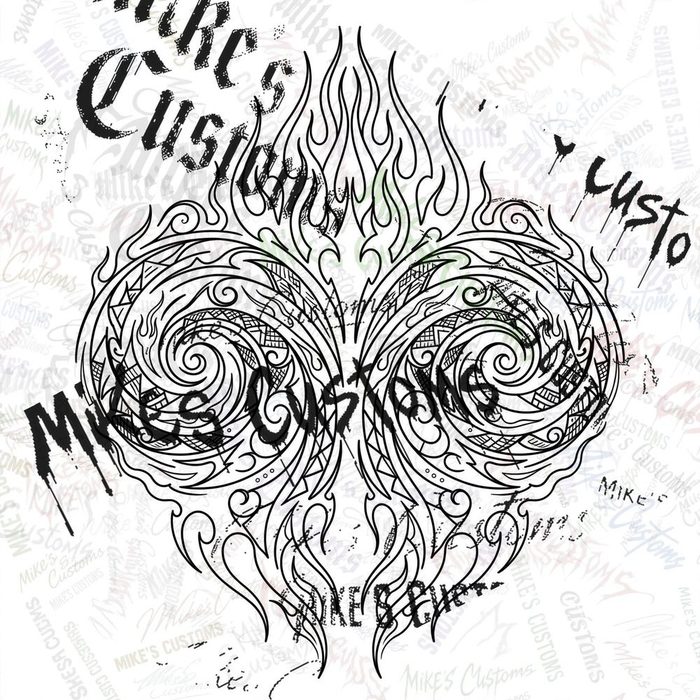
Tribal design is pure black shape: tapered blades, crescents, spirals (koru), waves and woven bands, drawn so the negative-space skin between shapes is as sharp as the black itself. Traditional systems build with repeated motifs in bands that follow the body's musculature; abstract tribal flows in sweeping, symmetrical compositions that wrap a shoulder or climb a back. There is no shading and no color — form is everything.
Best placements for Tribal tattoos
Tribal is body architecture: it is drawn to flow with muscle groups, which is why shoulders, upper arms, chests, backs and calves are its classic ground. Bands wrap arms and legs; large pieces follow the lats, traps and shoulder blades. Placement and design are one decision in tribal — the same motif straightened on a forearm and curved over a deltoid are two different tattoos, and the drawing should be made for the body it will live on.
Tribal placement should start from movement, not from a printed flash sheet. A shoulder piece that ends mid-deltoid in a hard point looks strong with the arm down and amputated when the arm is raised, so the tips and crescents need checking through the arm's full range before the stencil is accepted. Chest tribal that follows the pectoral edge will sit differently on a body that trains and grows than it did on day one, and experienced artists leave the composition room to be extended rather than boxing it against a border it will outgrow. Ankle and lower-leg bands are affected by boots and socks during healing and by calf shape in wear: a band that is level around a tapered calf is not a straight line, it is a carefully curved one, and it should be drawn standing with weight on the leg. Lower-back tribal, the era-defining placement of the 1990s, follows the sacrum and hip lines and needs the same standing check. Copying a design drawn for someone else's back onto a different spine almost always requires redrawing the flow, even when the motifs stay the same.
How big does a Tribal tattoo need to be?
Tribal reads at any size but lives large: its sweeping shapes want room to move, and most pieces start at four inches and go up to full backs and torsos. Small tribal exists — a band, a single spiral — but the tight interior negative space in dense patterns needs scale, because black spreads slightly with age and skin-thin gaps between blades can close over the years.
How Tribal tattoos age
Solid black shapes are essentially permanent; tribal is among the longest-lived work you can wear. Aging shows at the fine points and narrow skin-gaps, which soften first. Bold, well-spaced tribal looks nearly unchanged at twenty years. If a design's beauty depends on hairline gaps, scale it up — that single choice decides how it reads in old age.
Session and cultural realities both belong in a serious tribal consultation. Large black tribal fields are packed solid like blackwork, with the same cracked-scab risk over moving joints and the same need to stage very large backs or torsos across sittings so the skin keeps taking pigment cleanly. The points are the technical test: a tapered tip that ends in a true point on fresh skin will soften slightly with age, so artists who know the style end points a fraction bolder than the drawing suggests. For traditional Polynesian, Samoan and Maori-derived work there is a second test that matters more than technique: whether the patterns, their placement and their meanings are the wearer's to use, and whether the artist is trained in that system rather than copying photographs of it. Abstract 1990s-style tribal carries no such protocol and can be chosen purely as form. Tribal suits people who think in body architecture and want work that will outlast trends. It does not suit anyone expecting shading, color or fine detail inside the shapes, or anyone who wants a sacred pattern treated as clip art without its rules.
Choosing a Tribal design
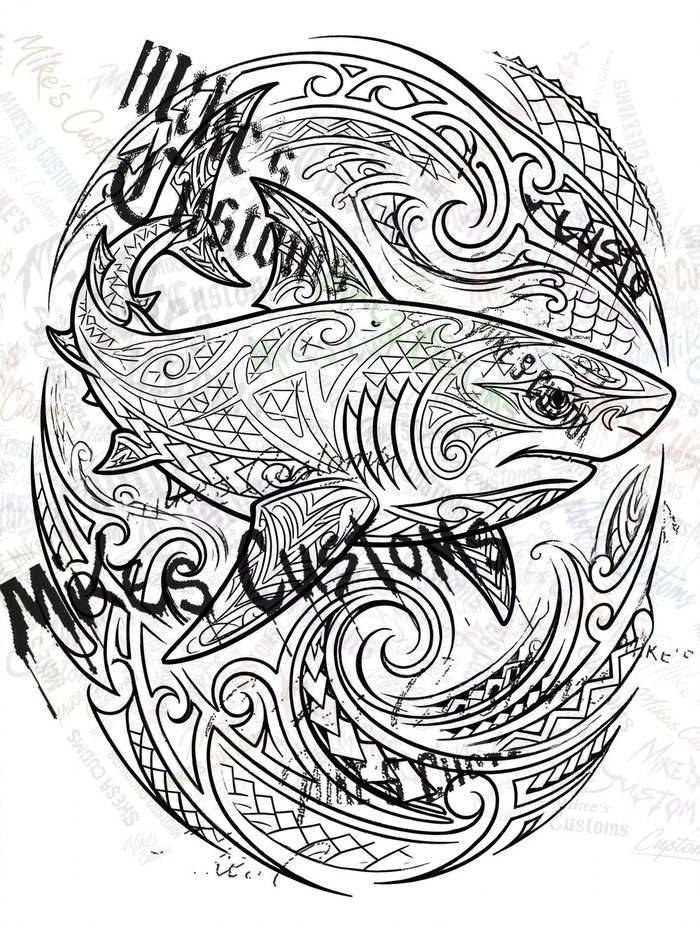
Our tribal gallery includes both abstract flowing work and pattern-based designs; each listing notes its family so you know what you are looking at. For body-flow pieces, custom is the professional route: tell us the exact body part and whether the piece should mirror or wrap, and the design is drawn to that anatomy rather than stretched to fit it later.
Browse Tribal designs Order a custom Tribal design
Related style guides
- New School — Tattooing turned cartoon: exaggerated proportions, graffiti energy, candy color and characters that burst off the skin with thick outlines and wild perspective.
- Minimalist — The least ink that can carry the meaning: tiny symbols, single-line drawings, small icons and quiet marks chosen for personal significance over spectacle.
- Chicano — Fine-line black and grey born in the barrios and penitentiaries of the Southwest: payasas, lowriders, lettering, Catholic imagery and portraits in pencil-soft shading.
New to all of this? Start with how to choose a tattoo design that ages well, then the complete aftercare guide for what happens after the appointment.